Timing Creates Rhythm
Eating at consistent intervals helps establish a predictable internal routine, allowing your body to anticipate and prepare for each meal.
Consistent daily meals are one of the simplest habits you can build to support your energy, concentration, and overall sense of balance throughout the day.

Your body operates on natural rhythms. Providing it with consistent nourishment throughout the day helps it function at a steady, comfortable pace.
Eating at consistent intervals helps establish a predictable internal routine, allowing your body to anticipate and prepare for each meal.
Repeating the same patterns day after day is what turns a meal plan into a sustainable lifestyle habit rather than a short-lived effort.
Spreading nourishment across the day, rather than concentrating it in one or two large sittings, supports a more even experience of energy and focus.
Based on general nutritional awareness, here are some areas where a consistent eating schedule may contribute to your everyday experience.

Spacing meals across the day may help maintain consistent fuel availability, reducing the highs and lows that can come from irregular eating patterns.

A well-timed eating pattern supports your ability to concentrate on daily tasks by ensuring your mind is regularly nourished.

Regular meals help you tune into natural hunger signals more clearly, making it easier to notice when you are genuinely hungry or satisfied.

Consistent meal timing works in harmony with your body's natural daily cycles, which may contribute to a more balanced internal rhythm.

Structured meal times create a reliable framework for your entire day, making it easier to plan other activities and commitments around them.

Regular patterns make it easier to maintain long-term mindful eating, as the routine itself becomes a guiding structure rather than something requiring daily willpower.
Building a consistent meal schedule does not require drastic changes. Small, intentional steps add up over time.
Take a few minutes each week to think about your schedule and roughly when meals will fit into your day.
Choose meal windows that work for your lifestyle and try to keep them relatively consistent from day to day.
Pay attention to hunger and fullness cues. Regular timing helps make these signals clearer and easier to recognize.
Make small, sustainable changes rather than overhauling everything at once. Even one consistent meal time is a great start.
This is one example of how meals might be spread across the day. Adjust timing and portions to suit your individual schedule and needs.
Dive deeper into the topics that matter most for building a consistent and balanced approach to daily eating.

Explore how a consistent eating schedule may support your energy, mental clarity, natural appetite awareness, and overall day-to-day experience.
Read the guide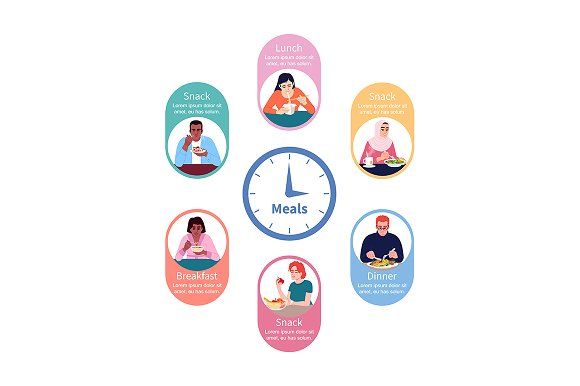
Learn how to build a flexible eating schedule that fits your lifestyle, covering morning nourishment, midday meals, afternoon snacks, and evening eating habits.
Read the guideAll materials and practices presented are for educational and informational purposes only and are intended to support general well-being. They do not constitute medical diagnosis, treatment, or advice. Before applying any practice, especially if you have chronic conditions, consult a qualified healthcare professional.
Browse our guides or get in touch with any questions about building a consistent daily meal pattern.